Why Agentic Commerce
Needs Real-Time
Product Data to Succeed?

Read Blog
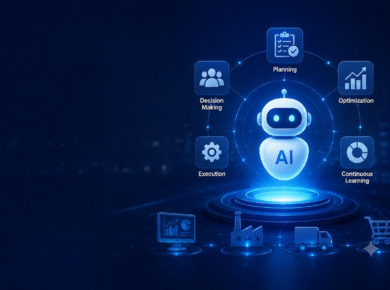
Digital commerce is entering a new phase where AI agents act as buyers. Instead of people searching, comparing, and clicking, software agents now understand intent, evaluate options, and complete purchases automatically. This shift is called Agentic Commerce. It changes how businesses must think about data, systems, and digital sales.

In this model, websites and apps are not the main interface anymore, but Data is. AI agents read product feeds, APIs, and structured information instead of web pages. That is why real-time product data has become one of the most important business assets.

The e-commerce industry is already shifting this way. Google has announced AI Mode with Business Agent and Checkout Protocols. This lets AI systems validate product data, check availability, and place orders directly with merchants. Amazon is expanding its AI shopping agents. These agents monitor prices, suggest alternatives, and automate reordering. Platforms like Shopify, OpenAI, and Microsoft are also creating AI-powered buying experiences that rely on clear, machine-readable product data.

These changes make one thing clear. Commerce is being built for machines, not just for people.

What Is Agentic Commerce?

Agentic Commerce is a digital buying model where AI agents receive goals rather than just clicks. A user might say, “Buy the best laptop within a specific budget,” or “Keep my office supplies stocked.” The AI handles all the rest.

The AI agent searches across sellers, compares options, evaluates prices and delivery times, and makes the purchase without the user needing to visit multiple websites. It learns from past choices and gets better over time. 

This creates a shift from human-driven shopping to intent-driven, machine-executed commerce, where decisions are made at machine speed using data rather than visual browsing.

Agentic Commerce Runs on Data, Not Interfaces

Agentic Commerce works because AI agents can process large amounts of information in real time. They do not scroll or browse. They analyze structured data to make the best decision for a specific goal, such as buying the lowest-priced product with the fastest delivery.

For this to work, product data must always be accurate and current. AI agents rely on details such as:

    • Live prices and discounts.
    • Current stock availability.
    • Product attributes and variants.
    • Compliance and regulatory information.
    • Delivery and fulfillment timelines.
    • Regional and language-specific data.

If any of this data is outdated or inconsistent, the AI will make a wrong decision. In Agentic Commerce, data quality directly affects revenue.

What Real-Time Product Data Really Means?

Real-time product data means that every change within the business shows up right away in the product record. If inventory drops, the AI notices it. If pricing changes, the new value is available immediately. If a new promotion starts, every AI buyer sees it at the same time.

This includes:

    • Inventory levels updated across all channels.
    • Pricing and promotional changes in real time.
    • Accurate and enriched product descriptions.
    • Technical specifications and compatibility data.
    • Regional variations for global selling.
    • Regional and language-specific data.

Google’s Business Agent framework shows that AI systems will directly use structured product data from merchants to make buying decisions. If this data is slow, outdated, or unreliable, the AI will skip the business and choose another seller.

How AI Agents Use Product Data?

AI agents use product data as their main input for decision-making. They scan thousands of product records across many sellers and evaluate them based on multiple factors.

This includes:

    • Price compared to value.
    • Availability and delivery speed.
    • Supplier reliability.
    • Customer feedback and performance history.
    • Long-term cost and replenishment needs.

The better and more detailed the product data, the more confident the AI becomes in choosing a brand or seller. In this way, product data becomes a competitive advantage.

Why PIM Becomes the Core of Agentic Commerce?

Product Information Management (PIM) has become central to this model. Beyond product data management, an AI-powered PIM system is the primary source of information for AI-driven purchasing.

A modern PIM platform helps by:

    • Centralizing all product data into a single source of truth.
    • Keeping product relationships clear and connected.
    • Maintaining data quality and consistency.
    • Enriching complex product data for AI use.
    • Sharing accurate data across all channels.

PIM is the platform that provides AI agents with accurate product information. When the PIM system is outdated or poorly maintained, the AI experience suffers.

Why Enterprise Systems Must Work Together

AI agents need more than product descriptions. They rely on real business data from across the enterprise, including inventory, pricing, supplier information, and logistics, all of which must be connected and kept up to date.

This requires:

    • Real-time links between PIM, ERP, and commerce platforms.
    • API-driven data exchange.
    • Unified product and pricing rules.
    • Consistent master data across systems.

When these systems are aligned, AI agents can make accurate, confident buying decisions.

The Role of Data Governance in AI Commerce

In Agentic Commerce, AI relies completely on data to make decisions. For it to work well, the data must be accurate, easily accessible, and kept up to date. That’s why strong data governance and an AI-driven master data management platform are so important.

These practices help ensure:

    • One consistent version of every product.
    • Clear ownership and validation of data.
    • Traceability and auditability.
    • Compliance with regional and industry rules.

When these systems are aligned, AI agents can make accurate, confident buying decisions.

What IT Heads Must Focus On?

Agentic Commerce brings new data challenges for IT leaders. Companies need to ensure their AI agents can quickly access reliable, accurate product information.

To meet this need, companies should focus on the following areas:

    • Real-time data systems.
    • Up-to-date PIM and MDM platforms.
    • Integration through APIs.
    • Well-managed, high-quality product data.

By taking these steps, businesses can become preferred suppliers for AI buyers.

Adapting to the Era of AI-Driven Commerce

Agentic Commerce is changing the way people shop online. In many cases, AI systems now act as buyers, making decisions based on data rather than relying solely on human shoppers.

In the coming months, tools like Google’s AI Mode, Amazon’s shopping agents, and AI-powered checkouts will become more common. So, companies should pay close attention to the quality of their product data, not just how their websites look.

To stay visible and competitive in this AI-first era, your organization needs to update its product data, PIM, and digital commerce systems now. The future of buying is here, so make sure your data is ready.

Key Takeaways

  • Agentic Commerce relies on data instead of traditional websites. AI agents make buying decisions using real-time, structured product data, not visual storefronts or manual searches.
  • Accurate, real-time product data is essential for AI-driven purchasing. Inaccurate or outdated data leads to failed purchases and lost trust, causing AI agents to choose other suppliers.
  • AI-Powered PIM and AI-driven master data management are foundational blocks. These platforms provide a single source of truth, ensure data quality, and streamline product information, all ready for use by AI agents.

Latest Resources​