How Pimcore Is Pioneering AI-Driven Agentic PXM: Unlocking Intelligent Experiences for Enterprises

Read Blog

The way enterprises manage product experiences is changing—and not gradually. With its landmark Pimcore Inspire event and the release of Platform Version 2026.1, Pimcore has made its most decisive move yet: transforming from a data management platform into an AI-native experience engine. For businesses navigating the complexity of multi-channel commerce, this shift isn’t just a product update—it’s a new operating model.

At Innowinds, as a Pimcore Silver Partner, we’ve been watching this evolution closely. Here’s what the latest wave of Pimcore innovation means for businesses that rely on product data to drive growth.

The Era of Agentic PXM Has Arrived

For years, Product Experience Management (PXM) has been largely reactive—teams pulling data, enriching content, and publishing manually across channels. Pimcore is now turning that model on its head.

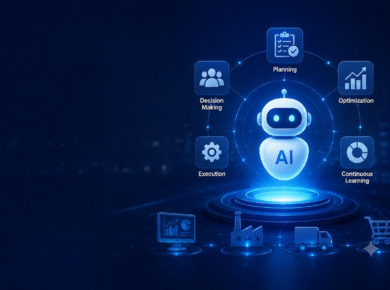
The introduction of the Pimcore Agent SDK marks the beginning of what the company is calling AI-Driven Agentic PXM—a model where AI agents don’t just assist human operators, they act as authenticated participants within the platform. These agents can execute workflows, manage data enrichment, and trigger actions across systems, all within the same permission framework that governs human users.

What does this mean in practice? Imagine an AI agent that automatically enriches a new product record the moment it enters your catalog—pulling specifications, generating descriptions, mapping categories, and flagging missing attributes—without a single human touchpoint. Or an agent that monitors your data quality in real time and escalates exceptions before they reach your storefront.

This is no longer a vision. It’s in beta and built into the platform’s core. For enterprises dealing with large, complex product catalogs, the productivity implications are significant. The bottleneck in PXM has rarely been the platform—it’s been the human effort required to keep data accurate, complete, and channel-ready. Agentic PXM directly addresses that constraint.

A New Foundation: The Data Spine

Powering this AI-first approach is a new architectural concept Pimcore calls the Data Spine—a unified layer designed to deliver consistent, real-time data across every system and channel in an enterprise’s ecosystem.

Traditional PIM and MDM setups often struggle with synchronization delays. Data changes in one system take time to propagate to others, creating inconsistencies that affect everything from product listings to customer experience. The Data Spine is Pimcore’s answer to that problem—a foundation that reduces synchronization lag and ensures every connected system is working from a single, trusted version of the truth.

For enterprise teams managing data across ERP, eCommerce, DAM, and marketing platforms, this is a meaningful shift. It reduces the operational overhead of data reconciliation and creates the kind of real-time data environment that modern AI-driven workflows depend on. The Data Spine isn’t just an infrastructure upgrade. It’s the prerequisite for everything Pimcore is building next.

A Cleaner, More Modern Platform

Alongside these strategic moves, Pimcore 2026.1 also closes a significant chapter in the platform’s history. The Admin UI Classic—built on the legacy ExtJS framework—has been fully retired. The platform now runs on a unified, modern Studio interface that is faster, more intuitive, and designed for the workflows of today’s data teams.

For organizations that have been hesitant to migrate away from the classic interface, this is the moment. The new Studio brings with it features like detachable live previews for documents, alternative element trees that allow teams to visualize and manage data by attribute groupings, and advanced grid columns that let users combine fields and add context directly within their workspace.

These aren’t cosmetic changes. They translate into faster onboarding, reduced training time, and a lower barrier for business users to work directly within the platform—without relying on technical teams for every adjustment.

Scaling Without the Complexity

Pimcore has also introduced PaaS Boosters—a dynamic infrastructure capability that allows the platform to scale resources in real time based on demand. For businesses running campaigns, seasonal promotions, or high-traffic commerce operations, this means the platform adjusts to workload spikes automatically, without manual intervention or pre-planned capacity upgrades.

Combined with full Symfony 7 support and the new Pimcore Open Core License (POCL), the platform is now better positioned for long-term performance and compatibility within modern technology ecosystems.

What This Means for Pimcore Customers and Partners?

The 2026 releases represent a coherent strategic direction: Pimcore is building a platform where AI is not a layer added on top, but a capability woven into the fabric of how data is managed and delivered.

For enterprises evaluating or already running on Pimcore, the near-term opportunity is clear—start exploring where Agentic workflows can replace manual effort in your product data operations. The ROI on catalog enrichment, data quality management, and channel publishing is measurable and achievable today.

For Pimcore partners like Innowinds, this evolution also opens new conversations with clients about what an AI-enabled PXM roadmap looks like—and how to sequence the right investments to get there.

FAQs: Key Questions on Pimcore's 2026 Updates

Q1. What exactly is AI-Driven Agentic PXM?

It’s Pimcore’s new model powered by the Agent SDK, where AI agents act as authenticated users to automate workflows like data enrichment—freeing enterprises from manual PXM tasks.

Q2. How does the Data Spine benefit enterprise data teams?

It delivers real-time unified data across systems, cutting sync delays and enabling consistent experiences from ERP to storefronts.

Q3. Why retire the Admin UI Classic in 2026.1?

To deliver a modern Studio UI with live previews and flexible views, accelerating business user adoption without technical dependencies.

Q4. What are PaaS Boosters for?

Real-time infrastructure scaling for demand spikes, ensuring seamless performance for enterprise commerce and campaigns.

Key Takeaways:

Pimcore’s direction with Inspire and the 2026.1 release isn’t about adding features. It’s about changing the fundamental way product data works inside an organization—making it faster, smarter, and increasingly autonomous.

The enterprises that will benefit most are those that start building toward this model now: investing in clean data foundations, exploring agentic workflows, and working with partners who understand both the platform and the business outcomes it’s designed to deliver.

At Innowinds, that’s exactly the conversation we’re ready to have. Contact us to discuss your Pimcore roadmap.

Latest Resources​